Total Pageviews

Search This Blog

Monday, October 21, 2013

Games for Asymmetric Warfare

Although sports and games are often likened to war, there is one great difference: symmetry. Sports and games are set up so that both sides begin with equal strength with skill determining the outcome. The purpose of this is to even the odds between the players so the game is more interesting. However, in war, it is common for the opposing armies to be very different in structure, size, leadership, technology, and so on. Asymmetric warfare is a popular catchphrase these days, but it's redundant- warfare in general is asymmetric.

I think it would be useful and fun to create games to model asymmetric warfare. One idea I had was to take the game of chess. One side would have the usual pieces and the other side would start with one row of pawns in the normal place. But, that side would also have 40 extra pawns in reserve and could add them one at a time to its back row. I wonder what strategies both sides would create to deal with this situation. What strength of pawns would be enough to overwhelm even the best chess player?

Another possibility would be a variant of the Battleship game. One side would have the normal set-up and the other side would have only a patrol boat. However, that side would be know the location of all the enemy ships. The side with more ships would be allowed to take two shots per turn. I wonder whether firepower would win over intelligence in that kind of set-up.

Of all the war games, I think Stratego does the best job of simulating the fog of war as well as the importance of deception. A good way to make Stratego more interesting would be to give each player some equal number of resource points at the beginning and let each player purchase units as they see fit. Since each player has no idea what the opponent will be throwing at them, would they buy a variety to balance their strengths or would they focus on only a few unit types?

A good war game should incorporate aspects of supply, morale, terrain, mobility, uncertainty, surprise, luck, and intelligence. I know of no such game at the moment and I would be interesting in seeing one.  

Sunday, October 20, 2013

The Batman Principle

The uncomfortable fact about Batman is that he is not very good at fighting crime. True, he fights crime in very heroic and entertaining ways, and he usually succeeds in defeating his adversaries, but never for good.

His distaste for killing is admirable, although that often leaves the villains alive to cause more mayhem later. Since he doesn't have any problem with taking the law into his own hands, I always wondered why he never captured and locked the villains in his own prison rather than ones they always easily escaped from. That would stop them permanently and not violate his taboo against killing. Of course, the reason he doesn't is that the writers want to keep the story going.

I think many real problems are made worse by the desire to look cool while trying to win it instead of winning. I call this the Batman Principle.

This principle is often seen in actually law enforcement with gaudy uniforms & vehicles, questionable practices such as high-speed pursuits, and frequent failure to catch criminals. It is also present in big businesses that spend more money on flashy ad campaigns than looking for new opportunities.

Of course, the best place to see that Batman Principle at work is the military. The military wastes vast sums of time and money on useless training, vehicles, and propaganda. I think the single best example of this is the Bradley Fighting Vehicle. Originally intended to be a simple scout vehicle and troop carrier, it morphed into an armored vehicle with lousy armor, a scout vehicle too slow to scout, and a troop carrier that hardly carried any troops. All this because the generals wanted a vehicle that looked cooler. See the clip below for more details:


Another good example is the US Air Force's desire to replace the tough and effective but slow and ugly A-10 with a sleek, new fighter-bomber.


Rethinking the Nuclear Triad- Cutting the Price of Deterrence

The idea of the triad was to prevent a first-strike by not putting all the nuclear eggs in one basket. However, the whole idea of a first-strike is almost impossible anyway. The only way it can be done is if the missiles are positioned so that the flight time is less than 10 minutes, which is what the Soviets tried to do in Cuba and what the US tried to do in Turkey. Both nations ended up removing their missiles.

The Soviets developed a fail-deadly countermeasure called Perimetr. This system when activated would send signals to launch missiles automatically if it detected an attack.

I wonder if decoy missile silos might be a better solution to the first-strike problem. The blast radius of a typical warhead is 4 miles or so, which works out to about 50 square miles. The US is about 3.8 million square miles. An enemy would need to hit the US with about 76,000 warheads to cover all that area if the missiles were evenly spread out and hidden.

If thousands of decoy missile silos were built across the US, the enemy would not know where to aim its missiles and it could not possibly build enough missiles and warheads to destroy all possible missile locations.

I haven't run the numbers, but I suspect building a few thousand decoy silos and sprinkling the real ones among them would have been a lot cheaper than building and maintaining the other 2 legs of the nuclear triad for 50 years.

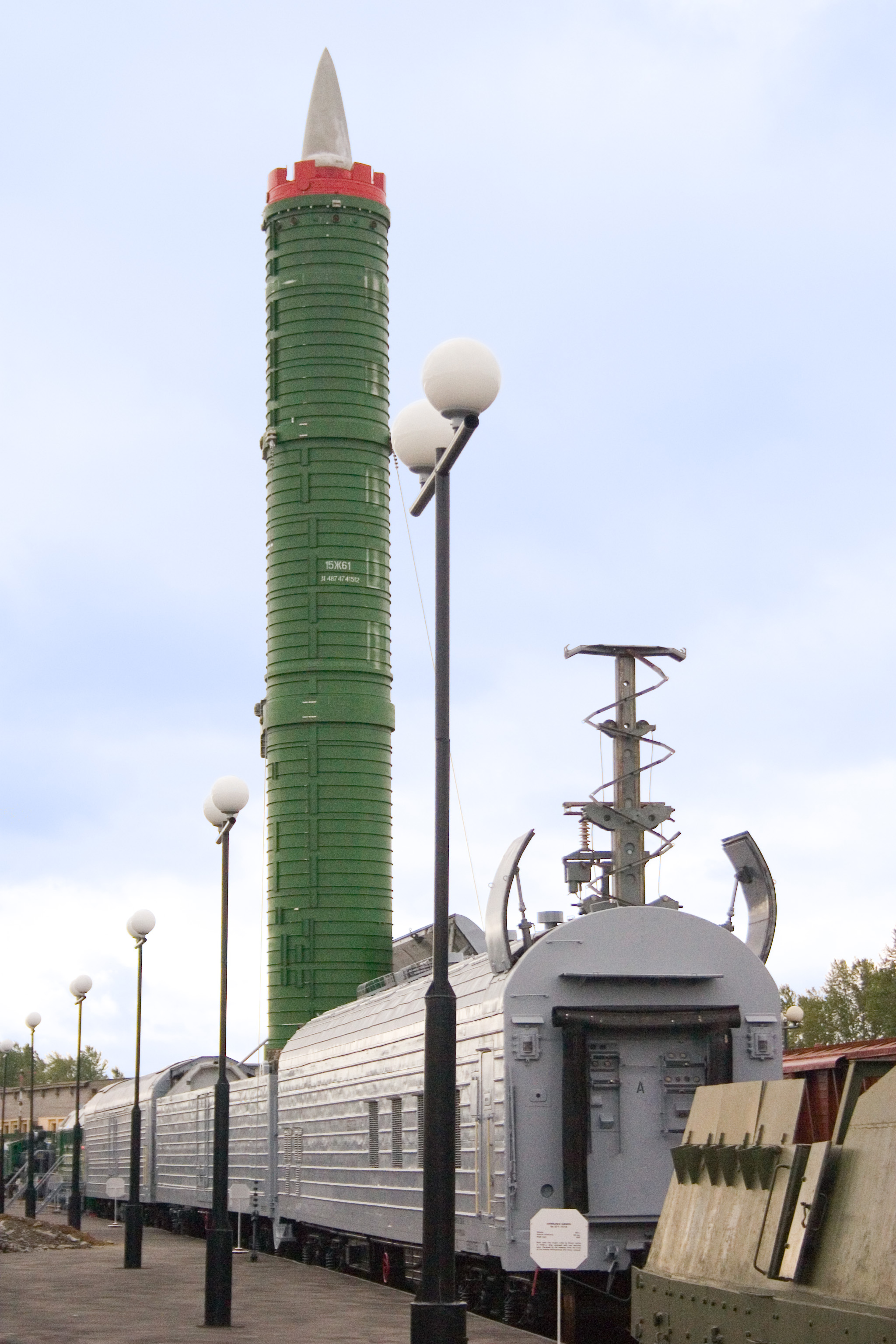
Another possibility would be putting the missiles on mobile launchers disguised as civilian vehicles- perhaps as a freight train. The Russians did just that with the RT-23 Molodets missile. The US equivalent program was never deployed.


"All warfare is based on deception." -Sun Tzu


Wednesday, October 16, 2013

Understanding Bureaucracy: Beavers & Peacocks

All large organizations are bureaucracies. Since it is very difficult to make decisions quickly by consensus in large groups, hierarchies are used instead. So, some become leaders and the rest must become followers.

The second principle of bureaucracies is inertia. Since most subordinates are afraid to disagree with their bosses, policies & procedures rarely change. Instead, they tend to become highly formalized. By requiring subordinates to follow strict procedures, subordinates are prevented from doing things that might make their boss look bad. 

The third principle of bureaucracies is attention. This is where the peacock comes in. A peacock gets attention because it uses feathers to make itself look bigger and stronger than it really is. It does this to get the attention of peahens so it can mate. In a similar way, subordinates in a bureaucracy compete for the attention of the bosses so they can get promoted. Bureaucracies also compete for attention with other bureaucracies for customers, etc.

Thus, the most important goal for employees & bureaucracies is to look good even if you aren't and avoid looking bad even if you are. For subordinates, this means sucking up to the boss and covering up mistakes. Agreeing with someone and copying them is the easiest way to get them to like you. And the one the boss likes the most gets promoted. For bureaucracies, this means looking big and impressive with nice buildings, fancy logos, and eye-catching ads and deflecting bad publicity.
So, bureaucracies are like peacocks- style over substance.

In contrast, the beaver is small, ugly animal. It has buck teeth and funny tail. But beavers are hard-working, intelligent animals. They build dams to create deep ponds. Then they bury green branches in the mud at the bottom. The cold water preserves the bark in the branches so the beavers have something to eat in the winter. They also build lodges so they have shelter in the winter. They dig canals so they can get to trees without having to walk on land where their predators are. Beavers work smart and think ahead. Indeed, it's interesting that a creature with a brain the size of an egg is better at planning for the future than a fair number of people.

Individuals and groups can accomplish more by being more like beavers and less like peacocks. The key to success is focusing on results- not appearances or intentions.


Tuesday, October 15, 2013

The Waste of Smothering Grenades

If you read the Medal of Honor citation archives, you will find many instances where a soldier deliberately threw himself on a grenade to protect his comrades from the blast. The military needs to train soldiers not to do this.

Why? It is not necessary. Being close to a grenade when it explodes does not mean certain death. Max Cleland was almost touching a grenade when it went off and he survived, although he did lose both legs and an arm. Most grenades have a 4-second fuse and do the most damage in about a 15-ft radius. If a grenade lands nearby, you have 2 to 3 seconds to find cover. That few seconds is enough to get at least 15 ft away from the grenade. If that is not possible, getting as flat as possible on the ground stomach down and head facing away will protect vital areas enough for survival. Getting shrapnel up your ass like the watch in Pulp Fiction is unlikely to kill you quickly.

For a more in-depth discussion on this topic, I suggest this article from Vietnam-Vet John Reed.

Securing the Border With Atomic Power- Or, How to Kill Two Birds With One Isotope

The US has thousands of tons of nuclear waste uselessly decaying in containment facilities. At the same time, all efforts to secure the border with Mexico have failed. Could there be a way to solve both these problems at the same time? I believe so.

I propose the construction of an atomic fence on the border. This fence will be made up of thousands of blocks of Cobalt-60, which has a short half-life but still produces enough gamma radiation to make safe approach impossible. Small gaps could be left in the fence at major crossings so as not to interfere with regular commerce.

Additionally, any creatures unfortunate enough to venture too close to the radiation fence would quickly die and their ghastly corpses would serve as a further warning to trespassers.

Radiation has a number of advantages over lesser obstacles such as landmines or a burning river of napalm. Among these are lower construction and maintenance costs as well as greater killing power.

All that is left is to come up with a catchy name. Here are several suggestions:

1) The Great Wall of America
2) The Freedom Wall
3) The Atom Shield of Democracy

I think 3) is a real winner. Jonathan Swift would approve.  

Cryptography in a Nutshell & Steampunk PGP

My views on cryptography as a rank amateur:

It is best to prevent the enemy from detecting or intercepting messages if possible, but radio, internet, mail, and phone are easily intercepted. So it's safe for certain people and groups to assume their messages are being intercepted and that the enemy will try to decrypt them.

The goal should not be to make an unbreakable code, but make decryption difficult enough that the enemy won't waste time with it. A few basic principles greatly increase the difficulty of breaking a code:

1) No spaces between words: spaces indicate single words which can be guessed if enough context is present.

2) If possible, large amounts of bogus messages should be sent to keep the enemy busy intercepting and decrypting nonsense.

3) Simple substitution cyphers are quick, but easily broken. The best codes never encrypt the same letter in a consistent way. The German Enigma machine was a good example of this.

4) Real messages should be short and rarely sent. The more messages that are sent, the more data the enemy has to analyze.

5) Codes should be changed frequently. However strong a code is, if the machine and code books are ever captured, that code is now a tool for the enemy. The Germans and the Japanese thought their codes were safe and kept using them even after they were broken. This was a major factor in their defeat.

6) By the same principle as 5), if an enemy code is broken, the information must be exploited judiciously to avoid warning the enemy. During WW2, the US could have exploited decrypted Japanese messages in many ways, but the only made use of them to win the Battle of Midway and to kill Admiral Yamamoto.


I invented my own code today that I call Steampunk PGP (pretty good privacy). The first part is to write the message in all caps with no spaces. For example: EDWARDSNOWDENISAHERO

Next, each letter changed into a 2-digit code according to a cypher. To make things simple, I'll let each letter match up with its alphabetical order. That gives:

05 04 23 01 18 04 19 14 15 23 04 05 14 10 19 01 08 05 18 15

Next, I use a pair of dice to add a random 1-digit number to each of the number pairs. I disregard 12 and treat 11 as 1 and treat 10 as 0.

That gives something like:

205704723001518804314715923604505314910019101308705618915

This message can be easily decrypted by disregarding the first, fourth, etc. digits and then matching up the numbers according to the cypher.

An enemy analyst who tried to decrypt this message would likely notice that the number of characters in every message is a multiple of 3, and use that to try to break the code into 3-digit groups for letters. However, since letters are encoded with a random leading digit, they would have a hard time telling whether 205 is the same as 505 or 705. To make the code even stronger, a random digit could be added in front of every code digit. Thus, each letter would be encoded by a 4-digit number with 2 random digits. The process could be repeated for even greater secrecy although doing the encryption and decryption by hand would probably be too slow. Also, approximately 1/6 of the random digits will be 7 as that is the most common outcome of rolling 2 dice. Still, I think it's random enough to be a good code.

I call this method steampunk because it requires no special equipment- just pen, paper, and dice.