Total Pageviews

Search This Blog

Sunday, November 12, 2023

Comparison of Polypeptide and Glycopeptide Antibiotics


Below are two different diagrams of bacitracin. Not sure which one has more accurate bond angles. I rarely see molecules form big circles.


Wikipedia says:

***
Cyclic peptides are polypeptide chains which contain a circular sequence of bonds.[1] This can be through a connection between the amino and carboxyl ends of the peptide, for example in cyclosporin; a connection between the amino end and a side chain, for example in bacitracin; the carboxyl end and a side chain, for example in colistin...
***

Colistin is a polymyxin, but since it was mentioned as being a cyclic peptide too, I'll add it below.


Amanitin has an indole core. That's first one I've seen so far. 


***
Teicoplanin is an antibiotic used in the prophylaxis and treatment of serious infections caused by Gram-positive bacteria, including methicillin-resistant Staphylococcus aureus and Enterococcus faecalis. It is a semisynthetic glycopeptide antibiotic with a spectrum of activity similar to vancomycin. Its mechanism of action is to inhibit bacterial cell wall synthesis.[2]
...
Its strength is considered to be due to the length of the hydrocarbon chain.[4]
***

I'm not sure why the length of the hydrocarbon chain would matter. Then again, I only had two semesters of organic chemistry in college. Checking the reference, I got this:

***
Teicoplanin is the only glycopeptide antibiotic not to dimerise, but its potency is believed to come from its long hydrocarbon chain. This anchors the antibiotic to the cell membrane from where it can more effectively inhibit cell wall synthesis.
***

I wonder how that hypothesis about the length of the carbon chain could be tested. If it could be made to dimerize, would that molecule also be medicinal?


This one has a good breakdown of what are effectively the antibiotic's functional groups. 
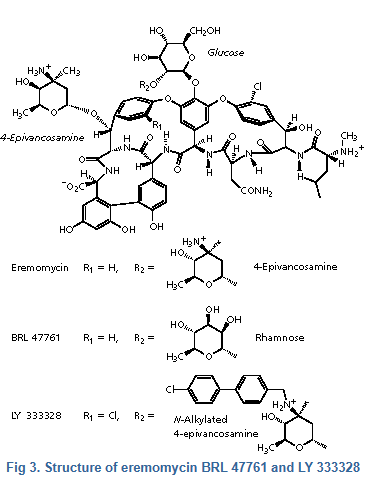

Like teicloplanin, telavancin has a long hydrocarbon chain coming off a nitrogen.  


Ramoplanin also has a hydrocarbon chain coming off a nitrogen, though the chain has carbon-carbon double bonds and a keto group like teicoplanin.  

These last three are chemotherapy drugs.


Pingyangmycin is interesting because it is also a glycopeptide but is used to treat cancer rather than bacterial infections. 


How Many Countries Are De Facto One-Party States? (About 110 out of 194)

The de jure one-party states are China, Cuba, Eritrea, Laos, North Korea, and Vietnam. So that's five.

Some of the larger de-facto ones are Russia, Japan, and Mexico. Some of the smaller ones are Singapore, Angola, Republic of Congo, Equitorial Guinea, and Rwanda. That's eight more, so 13 total.

Most monarchies are effectively one-party states, with the royal family being the ruling party. That includes Saudi Arabia, Qatar, UAE, Oman, Bahrain, Kuwait, Jordan, Brunei, Eswatini, and Morocco. That's another 10, so 23 total. 

There are countries like Venezuela, Turkmenistan, Belarus, and Syria, which are dictatorships, so four more. Then there are countries like Egypt and Burma which are run by the military. We're up to 29 now.  

Iran's ruling mullahs have been in charge since 1979.  The Turkish AK Party has been in charge since 2002. The CCM party in Tanzania has ruled since 1977. 

The Taliban are in control of Afghanistan. Thailand spent long stretches under military rule. So that's 34.

I could keep going, but fortunately, Freedom in the World made a list already. 83 of 194 countries on it are not electoral democracies. The good news is another 84 countries are electoral democracies which are rated as "free". The remaining 27 are partly free. 

I do not think one-party states are inevitable, but they are a common outcome. Once a country slides into one-party rule, it tends to stay there. They are also not always bad places to live, as Japan proves. 

On the whole, it seems economic freedom is more important than political freedom to well-being. Economic freedom tends to promote political freedom. 


Comparison of Azole Medicines

 The simplest one (probably) is used to treat methanol poisoning.


A five-sided, two-nitrogen ring of a different sort here:


A more common antifungal appears below. The clover shape of the benzene and azole rings is something I don't see often. 


Another azole medicine I found with chlorine is below.


There are similarities between itraconazole, an antifungal and sonidegib, an anticancer drug. Sonidegib is also a hedgehog signaling pathway inhibitor. Another fun fact:

***
Sonic hedgehog protein (SHH) is encoded for by the SHH gene.[5] The protein is named after the character Sonic the Hedgehog.
***

Further down the Wikipedia hole, I found:

***
The function of the hedgehog segment polarity gene has been studied for influence on the normally polarized distribution of larval cuticular denticles as well as features on adult appendages such as legs and antennae.[7] Rather than the normal pattern of denticles, hedgehog mutant larvae tend to have "solid lawns" of denticles (Figure 1). The appearance of the stubby and "hairy" larvae inspired the name 'hedgehog'.
***

It's interesting that heartburn medicine is the result of studying how butterfly larvae develop. It's impossible to predict what scientific knowledge be useful. 


Two anti-parasitic worm medicines, both with heterocyclic rings. 


The above are truncated forms of a proton pump inhibitor. Note the heterocyclic part. Other PPI drugs appear below. Some treat acid reflux disease. Others kill parasitic worms. 


Here are two with sulfur.


And here are two with fluorine:


Comparison of Antiviral Medicines - Are There Pyrimidine-based Antivirals?

Some have core based on purine, such as aciclovir and entecavir. Several examples are shown below. It's interesting to note that antivirals in this group are structurally similar to the nucleotides adenine and guanine. That implies there are antivirals based similar to cytosine and thymine, which are pyrimidines. 


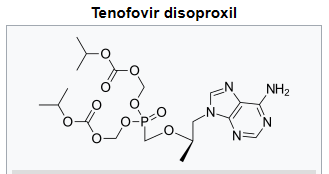
Ribavirin has only one nitrogen ring. Atazanavir has one nitrogen ring of a different sort, as does lamivudine. 


Nevirapine and its cousins have a triple ring structure. Note the cyclopropyl group, also found in other antivirals. 


Oseltamivir has no ring nitrogen atoms. 


Daclatasvir is a rare symmetrical antiviral. In general, it is rare for any medicine to be symmetrical. It has two imidazole rings. Ombitasvir is symmetrical and like daclatasvir is belongs to the NS5A inhibitor group. Velpatasvir has two imidazole rings, but is asymmetrical. 


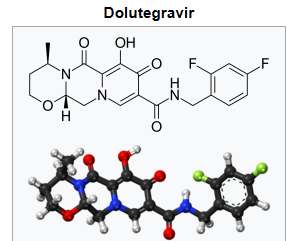
Here are some with fluorine. Like telaprevir, efavirenz also has a cyclopropyl group. 


Darunavir has sulfur, as does ritonavir in ring (thiazole) form. 


Protease inhibitors form a family of antivirals. Many contain sulfur, fluorine, or phosphorus. Asunprevir contains two cyclopropyl groups.


This combo has a very high cure rate against HepC and belongs to the NS5A inhibitor group. 


Telaprevir is an antiviral containing pyrazine (not pyrimidine) as a functional group. 


To summarize, most antivirals are either based on purine or are protease inhibitors. Here I will note I only has two semesters of organic chemistry in college in the course of earning my BS in chemical engineering. I got an A in the first semester and a C in the second semester.